

Executive Condo (EC) Buyer's Guide 2026: Eligibility, Income Ceiling, MOP and Financing
14 Jul 2026 · 7 min read

CEA Salesperson Registration: R061623D · Huttons Asia Pte. Ltd (Estate Agent Licence L3008899K) · Updated 14 July 2026
“Data-driven property advice. Straight talk, no hype.”

The EC is the most misunderstood home type in Singapore. It is cheaper than private, but it is not an HDB flat, and the rules changed meaningfully in 2026. This is a plain-English guide to who can buy one, what it costs to qualify, and what you are signing up for.
What an Executive Condominium actually is
An EC is built by a private developer but sold under HDB eligibility rules for the first stretch of its life. You get condo facilities, a private-condo layout and finish, but you buy it with income limits, a citizenship requirement and an occupation period attached. After the Minimum Occupation Period it can be sold on the open market to Singaporeans and permanent residents, and after full privatisation it becomes an ordinary private condo that foreigners can buy too. That journey from subsidised to fully private is the whole appeal.
Who can buy a new EC: the eligibility rules
To buy a new EC from a developer, you generally need to meet all of these:
- A family nucleus. You must apply under a scheme such as the Public Scheme (with a spouse, children or parents) or the Fiance and Fiancee Scheme. Singles buying alone do not qualify for a new EC.
- Citizenship. At least one applicant must be a Singapore Citizen, and the others Singapore Citizens or permanent residents.
- Age. You must be at least 21 years old.
- The income ceiling. Your combined household income must not exceed $16,000 gross per month.
- The 30-month rule. You must not have disposed of private property, or owned another EC, within the 30 months before your application.
The income ceiling: $16,000, and it is gross
The EC income ceiling is $16,000 in gross monthly household income, and Budget 2026 kept it unchanged. Gross means before CPF and tax, so your take-home is lower than the figure the ceiling tests. This is the rule that catches the most buyers, both at application and later, and it is a common reason units become drop-out units, which I covered in is it worth waiting for drop-out EC units.
How you finance an EC
You cannot take an HDB loan for an EC. It is a bank loan only, and two limits apply:
- Loan-to-Value of 75%, so you fund at least 25% of the price as downpayment, of which a minimum of 5% must be in cash and the rest can come from CPF.
- Mortgage Servicing Ratio of 30%, which caps your monthly home-loan repayment at 30% of gross monthly income while the MOP has not expired, on top of the wider 55% Total Debt Servicing Ratio.
The MSR is often the real constraint, more than the price itself, because it limits how large a loan your income supports. Note too that the Deferred Payment Scheme was removed in 2026, so new ECs are on the Normal Payment Scheme with progressive payments. For the full upfront cash picture, see how much you really need to buy a condo.
Grants and the resale levy
First-timer Singapore Citizen households can receive a CPF housing grant of up to $30,000 for a new EC, tapered by income, which lowers the cash and CPF you need at the start. If you are a second-timer who has taken a housing subsidy before, a resale levy applies, ranging from about $15,000 to $55,000 depending on your previous flat type. Factor that in early, because it is paid in cash if your old flat is sold before you collect your EC keys.
The ABSD advantage for HDB upgraders
This is the quiet reason ECs are so popular with upgraders. When you buy a new EC from a developer while still owning your HDB flat, you do not pay Additional Buyer's Stamp Duty upfront, provided you sell that flat within six months of collecting your EC keys. That timing removes the cash-flow trap that hits private upgraders. It sits alongside the other legitimate routes I cover in how HDB upgraders avoid ABSD and the full rates in the ABSD 2026 guide.
The 2026 rule changes you must plan around
The government tightened EC rules in 2026, and the changes matter most for newer projects:
- The Minimum Occupation Period on newer EC sites rose from 5 years to 10 years, so you plan for a much longer hold before you can sell.
- Full privatisation moved from 10 years to 15 years, delaying the point at which an EC trades as a pure private condo.
- The first-timer allocation rose to 90% of units, tilting balloting toward genuine first-time families.
These apply to newer EC land sites rather than every existing project, so always check the specific MOP and privatisation timeline of the project you are looking at. I break down each change in the 2026 EC cooling measures explainer.
New EC launches to look at
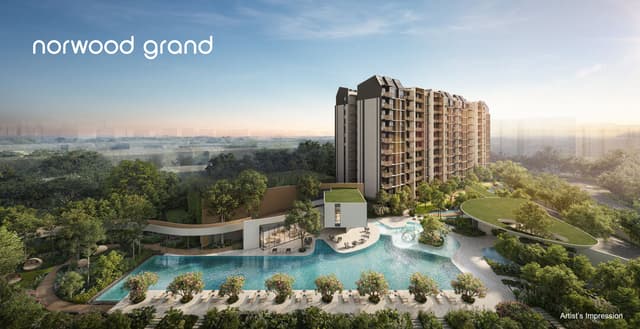
If you are shopping the current pipeline, the ones to watch include Wynwood Grand on Woodlands Drive 17 and Solano Grand, both from the current cycle, alongside Norwood Grand in Woodlands and Aurelle of Tampines. Because ECs ballot and the first-timer quota is now 90%, the project and the launch timing matter as much as the unit.
Is an EC worth it?
For an eligible first-timer family who can hold for the long term, an EC is one of the best value entries into condo living, since you buy below comparable private prices and ride the move toward privatisation. The trade-off is real though: a 10-year MOP is a long commitment, the income ceiling can complicate your plans if your pay rises, and the resale levy or grant clawback can apply. It suits patient owner-occupiers far more than short-term investors.
Eligibility comes down to your family profile, your combined income against the $16,000 ceiling, and the MSR on your loan. Send me those and I will tell you if an EC works, which launch fits, and the cash you will need. Check your EC eligibility on WhatsApp.
Common questions about buying an EC
What is the income ceiling for an EC in 2026?
The income ceiling is $16,000 in gross monthly household income, unchanged in Budget 2026. Gross means before CPF and tax, so your take-home pay is lower than the figure the ceiling tests.
What is the MOP for a new EC now?
Newer EC sites carry a 10-year Minimum Occupation Period, raised from 5 years in the 2026 changes, and full privatisation now takes 15 years. Older projects may still be on the earlier timelines, so check the specific project.
Can I use an HDB loan to buy an EC?
No. ECs are financed with a bank loan only, at up to 75% Loan-to-Value, with a 30% Mortgage Servicing Ratio and 55% Total Debt Servicing Ratio. At least 5% of the price must be paid in cash.
Do I pay ABSD on an EC if I still own my HDB flat?
Not upfront. When you buy a new EC from a developer, you do not pay ABSD on it upfront as long as you sell your existing HDB flat within six months of collecting your EC keys.
What is the EC resale levy?
If you are a second-timer who previously took a housing subsidy, a resale levy of roughly $15,000 to $55,000 applies when you buy a new EC, depending on your previous flat type. First-timers do not pay it.
The EC is still one of the best value ways into condo living for a first-timer family, but the 2026 changes mean you buy it with your eyes open. A 10-year hold is a decade of your life, so I always ask clients about children, schooling and job stability before we talk units, not after. Get the eligibility and the MSR right on paper first, because the heartbreak in this market is falling for a showflat and then failing a check. Buy the EC that fits your next ten years, not just your next viewing.
By Winnie Lim, licensed CEA agent and founder of AIProperty.sg
Thinking about an EC?
The rules reward buyers who plan the eligibility and the financing before they fall for a unit. If you want your profile checked against the income ceiling and the MSR, and matched to the right launch, message me. WhatsApp me at +65 88772688.
This article is for general information only and should not be considered financial, legal, tax, or investment advice. Property decisions should be based on individual circumstances and independent professional advice.
About the Author
Winnie Lim is a licensed CEA real estate agent and the founder of AIProperty.sg. With a background in supply chain analytics, she brings a data-driven approach to Singapore property, and won the 2024 Million Dollar Award for consistent, client-first results.
CEA Salesperson Registration: R061623D · Huttons Asia Pte. Ltd (Licence L3008899K)
Read full bio →Featured Properties
Properties relevant to this article
UNDER CONSTRUCTION
SOLD OUT

Aurelle of Tampines 晶莹轩 (Jīng Yíng Xuān)

93 Tampines St 62, Singapore 529444
UPCOMING

UPCOMING

Continue Reading
More from Buying Guide
HDB Resale Levy 2026: Who Pays, How Much and How to Calculate It
Buying a second subsidised flat? The HDB resale levy is $15,000–$55,000 and can't be paid with CPF. See who pays and how to calculate it.
16 Oct 2026
HDB Valuation Request (Request for Value): A Step-by-Step Guide for Resale Buyers
How to submit an HDB Request for Value: who submits, the $120 fee, the 10-working-day wait, 3-month validity, and what to do if the value is low.
09 Oct 2026
HDB Loan vs Bank Loan: Which Is Cheaper in 2026?
Bank loans for HDB flats start near 1.5% against HDB's 2.6%. Here is the real monthly and 25-year cost, the cash you need, and when HDB still wins.
09 Oct 2026